Monthly Archives: February 2012

Are Women ‘More than Enchanting’?

Are Women ‘More than Enchanting’?

{Once again, I’m delighted to be participating in the Patheos Book Club, Take & Read!}

This fortnight’s pick is Jo Saxton’s More than Enchanting: Breaking Through Barriers to Influence Your World from InterVarsity Press.

I’ve never really hoped to be a ‘leader,’ but last week when I listened to myself on Family Life Radio, I thought,

“Someone get that lady a PULPIT! She has a lot to say.”

(I used to enjoy hopping up into the pulpit to mimic my dad’s preaching and mannerisms, or jumping into the empty baptismal tank to give fake, dramatic testimonies a la ‘Unshackled,’ but I digress.)

Jo’s book made me hopeful because she doesn’t enter into the arguments on whether women should have positions of leadership and influence in Christian churches.

She assumes that they already do.

From the cradle to the cross, it’s women that are by Jesus’ side; while it’s tempting to call St. Paul a misogynist, Jo points out that he refers to women as ‘apostle’ Junia and ‘deacon’ Phoebe. In plain language, Jo handles the interpretive issues surrounding women’s leadership with grace and strength.

Jo also see in the examples of Nympha, Chloe, Priscilla, and other early church women a call to an empowered, missional perspective on domesticity that I find refreshing:

“There are many women who know that their home, not the church building, is a key place for ministry…It happens around the kitchen table, through meals and conversation. Their home is balm for the worn and weary, for those who’ve not experienced God’s love in a community. They seek to be the hands and feet and heart of Jesus in everyday living, influencing the world around them. The oikos [household] was a powerful strategy for kingdom expansion in the New Testament, and as a model continues to be so today.”


Thanks for the encouragement, Jo!

{You can read a Q&A with Jo Saxton here.}

The Bible Supports Slavery, Or, Why Boaz Should’ve Dissed Ruth

The Bible Supports Slavery, Or, Why Boaz Should’ve Dissed Ruth

I’m currently reading a great book about one of my very favorite writers of old–Harriet Beecher Stowe.

(She was a writer passionate for justice who stood at barely 5 feet tall and was married to a scholar of the Hebrew Bible–how can I *not* love her!?)

Stowe did a lot to win Christians to the abolitionist cause. Before her, Christians in the US were likely to view the Bible as supporting slavery–the patriarchs appear to have owned slaves, for example, and the New Testament doesn’t openly condemn slavery.

{Philemon, in fact, is a letter from Paul in which he’s, um, returning a runaway slave to his master.}

But Stowe–like most Christians nowadays–was right to discern in Christianity–yea, in the Bible!–a redemptive, liberating call–a duty to struggle against slavery. And she took up that struggle–with her pen. When Lincoln met her, he said, “Is this the little lady who has started this great war?”

Thing is, sometimes even Bible people are, well, unbiblical–and admirably so.

You take the book of Ruth.

Ruth’s a Moabite–the text won’t let us forget that–and her ancestors refused to give hospitality in the form of bread and water to the Israelites as they left Egypt.

This insult led to a prohibition against the Moabites in Deuteronomy 23:3:

“No [...] Moabite shall be admitted to the assembly of the Lord. Even to the tenth generation [Hebrew-Bible-speak for, 'seriously, not ever!'] none of their descendants shall be admitted to the assembly of the Lord.”

Complicates things a bit, no?

Boaz doesn’t say, “Oh, hey, I’m sorry for your bad situation, Ruth, but your ancestors insulted mine, so I’m biblically required to do the same to you.” No.

He breaks a ‘biblical’ law to fulfill a Greater Law in sharing bread with Ruth.

And then he marries her.

Does the breaking of the bread trump the breaking of the law?

Hmm...

Support Groups for Self-Starvation

Support Groups for Self-Starvation

sources: batteredandbruised.tumblr.com, fruuitcake.tumblr.com

Carolyn Gregoire has an eye-opening report up at Huffington Post on how Tumblr has become the home to a secret obsession of thousands of teenagers who use the microblogging platform for ‘thinspo’–for posting images of super-thin women along with disturbing messages like one I found on Tumblr:

Summer isn’t far away, YOU BETTER STOP  EATING OR NOBODY’S GONNA WANNA SEE YOU IN A SWIMSUIT.

Perhaps not surprisingly, a 2011 study found that teenaged girls’ susceptibility to body image and eating disorders positively correlated with the amount of time they spent using social media.

Some of the teens couch their anorexia in terms of a ‘lifestyle choice’–as in “I’m just choosing to life a low-calorie lifestyle.” But eating disorders are nothing of the kind. The deadliest of all mental illnesses, anorexia is more of a deathstyle choice.

another gem from Tumblr #thinspo

To me, the saddest thing about this phenomenon is how the users form community with one another online even as they keep their eating disorder a secret from the people in their lives. It’s such a distortion of how God made people to live: in life-affirming communion with one another and with God, and in harmony with the rest of the creation–which includes eating.

It’s not at all hard to see how too little family time + too much isolated time online could possibly lead to distorted ideas about bodies and eating. Apparently, Tumblr is cracking down on these blogs, but it won’t be long before these poisonous ideas find another platform.

A few thoughts on preventing these support groups from claiming your loved one as a member:

  • Make family meals a priority–family meals are really important. Try to make them happen.
  • Forbid ‘delete history’–Unsupervised time online is almost never a good idea; forbidding ‘delete history’ is one simple, effective rule.
  • Curb your own ‘fat talk.’ Refuse to allow people’s appearance (your own or others’) be a topic of conversation.
  • ‘Interrupt’ dangerous messages. Openly critique the unrealistic images of bodies presented in print, online, and on TV.
  • Celebrate communion, and not just on Sunday. Talk a lot about food as an edible symbol of God’s sustaining love (or whatever metaphor makes sense to you.)

What are your thoughts? How else can we help young people find and form better communities?

Health = Morality = Nothing New

Health = Morality = Nothing New

I LOVE this article by the Princeton University Classics Professor Brooke Holmes, which appeared in yesterday’s Huffington Post

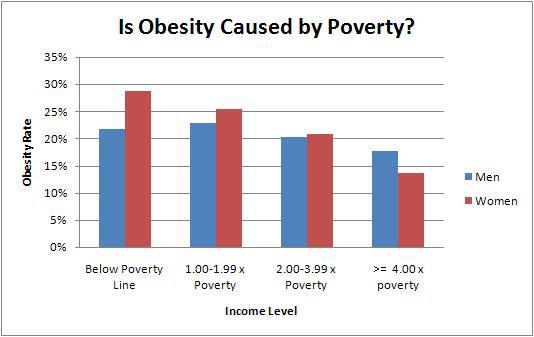
“The moralization of obesity is all too familiar these days. As America has gotten heavier, blame has become something of a national sport. Yet the ancient roots of Warren’s Plan are a reminder that the association between health and morality is nothing new…”

“…ancient authors are clear-eyed about the relationship between health and wealth. The author of a handbook on diet that was later attributed to Hippocrates imagines two audiences for his advice: people who lack the money and the time to take care of themselves on a regular basis; and people who can afford to devote themselves to their health. When Plato assigned different doctors to the free man and the slave, he was talking about two models of care. The slave’s doctor barks orders like a dictator before rushing off to his next patient. By contrast, the doctors of rich elites take the time to explain to their patients what’s wrong with their bodies. And not everyone was sitting around reading Plutarch. Health, the ancients knew, is a product of leisure, education and quality care.

Read it all here!

{have a great weekend!}

Guest Post! A Food Lover on the Grace of Taste

Guest Post! A Food Lover on the Grace of Taste

{Welcome to the blog, Tim!}

I love the way food tastes, how it feels, the sight of it; the smell of a cooking kitchen. I’ll try just about anything that is standard fare somewhere on the planet, so I’ve tried a lot of foods, and almost always to my benefit. Even though I love good eats, I’m pretty indiscriminate. I can eat pizza every day for a week and still say yes if someone suggests it for the next meal. I love soups from black bean to butternut, gazpacho to garbanzo, lentil to leek. Casseroles? Bring ‘em on, along with steaks, ribs, burgers, and all the fresh fruits and vegetables that, here in California, are abundant year-round.

God didn’t have to give us such wonderful senses of taste and smell so we can enjoy food so much. God could have given us merely moderate senses so that we would eat what we need to for sustenance but not necessarily have the ability to enjoy food to such an extravagant degree.

And that’s what it is–extravagance. Our God has created us with extravagant grace and it’s a common grace for all–like being able to breathe air and enjoy the feel of warm sunlight on our skin and marvel at the sights offered by a walk through a pine forest. To that list I add the experience of taste. And I think there’s a spiritual component to it, too.

Not only does the Bible use food imagery in describing our relationship with God and all God’s goodness toward people, but it  appears also to tell us that we can actually partake of God in a spiritual sense just as we do food in the physical sense. Here are some examples.

  • God invites us to a feast and overwhelms us with love. (Song of Songs 2:4-5)
  • Can’t afford the price of admission? God covers the tab:“Come, buy wine and milk without money and without cost.” (Isaiah 55:1-2)
  • And both our hunger and thirst are eternally satisfied:

“Then Jesus declared, ‘I am the bread of life. Whoever comes to me will never go hungry, and whoever believes in me will never be thirsty.’” (John 6:35.)

With God the functional and the spiritual are always inseparable, so can these word pictures that use food perhaps be more than mere metaphors?

Yes, and Jesus – the Living Water and Bread of Life himself – showed us how.

At the wedding reception in John 2:1-12, the host feared disaster, having miscalculated how much wine he’d need. What did Jesus do? At the urging of his mother, he turned water into wine. Not some boxed red, as some of us might have done, but a notable vintage.

God’s food isn’t only spiritual.

And our enjoyment of food isn’t only functional.

Our ability to taste is God-given–perhaps so that we can understand what it means to taste and see that God is good. In the miracle at Cana, the disciples believed–not merely by seeing, but by tasting the wine as proof of his goodness.

One day we’ll all celebrate a feast that will allow our spirits and our bodies to experience together God’s sustenance as it is truly meant to be enjoyed.

In the meantime, I will enjoy the good food God gives me to taste here and now as a reminder of the great banquet to come.

{Tim is a California native who changed his major three times, colleges four times, and took six years to get a Bachelor’s degree in a subject he’s never been called on to use professionally. Married for over 24 years with two kids now in college, his family is constant evidence of God’s abundant blessings in his life. He and his wife live in Northern California.}

That Sound of Your Own Voice Ringing in Your Ears…

That Sound of Your Own Voice Ringing in Your Ears…

Hey! I was on the radio yesterday!

And now there’s a whole 15 minutes of podcast!

Martha Manikas-Foster and I had a conversation based on my post on the “New Domesticity” that appeared a while back on the Christianity Today women’s blog. It was, in Martha’s words, ” a conversation that ranges from the value of unpaid work to the call of God on our lives.”

Check it out! And leave a comment, if you’re so inclined. {Click here.}

Lenctening Days

Lenctening Days

No, that’s not a typo.

Recently I learned that the word “Lent” {today–Ash Wednesday–is the first day of Lent} comes from the Old English ‘lencten,’ which sounds a lot like “lengthen” and, not incidentally, was the Old English word for Spring–that time when the days, well, lengthen.

Despite the admiration I’ve always had for traditional Lenten disciplines, this time of year–when I forget to start dinner on time because the growing evening light tricks me, when I’m drawn from sleep by the unexpected brightness of the morning sun–this time of year tends to make me a bit giddy. Meditating on dust returning to dust seems opposite to how I feel when Spring is, well, lenctening. Springing.

But maybe that’s reasonable. Lent is the season where deadness springs to life: snowdrops, crocuses, and daffodils cautiously raise their green and brilliant heads, stoic strawberry leaves unfold and tentatively sent out runners, tired, swollen goats bend to release their burdens in bringing forth light-footed young.

At this time everything in nature seems to be stretching and yawning awake after a long sleep, lively after months of sluggish drowsing.

Maybe Lent serves as a counterpoint to all this; a reminder that even as the grass “flourishes and is renewed” in the morning, “in the evening it fades and withers.” That God alone is everlasting.

It’s a sobering thought, but somehow, a joyful one. And so I hope this Lent not to curtail or cut back but to lencten: to take joy and satisfaction in God and in God’s gift of each lengthening, springing, light-filled moment.

Overly cute bunny gnawing a strawberry leaf. I can't help myself.

Satisfy us in the morning with your steadfast love,
   so that we may rejoice and be glad all our days.
Make us glad for as many days as you have afflicted us,
   and for as many years as we have seen evil.
{…}
Let the favour of the Lord our God be upon us,
   and prosper for us the work of our hands.

Psalm 90, NRSV

Gruesome Pirates, Heroic Grandpas, and Graeme…

Gruesome Pirates, Heroic Grandpas, and Graeme…

One of the reasons my dad is great is because when my son Graeme asks him to draw a pirate, he grabs whatever paper and writing implement is to hand and effortlessly produces stuff like this:

Or this:

At this point I need to make a confession.

“Forgive me, Parents who have been Parenting Longer than I, for I have sinned. Before I had children, I was inclined to Judge Thee In My Heart Without Knowing What the Heck Your Life was Like.”

“I wrongly believed that any Child Enamored of Violence Had Been Left to His Electronic Devices to Absorb the Evil Influences of Movies, TV, Violent Video Games, and Martial Arts.”

Now that I’m six years into this parenting racket, I’m not ready to call “nurture” an “assumption”, but I’m much less Blank Slate than I used to be. My boys, they have a very limited media diet. I’m a pacifist, for cryin’ out loud! Nonetheless, my boys crave pirates, knights, and anything involving weapons. They just do. They always have!

Graeme (3) even wants to change his name to “Graeme Pirate Stone.” Oh, and? He’s not satisfied if a pirate has just one deadly weapon. They must have, at least, a sword and a dagger–

My dad was initially reluctant to give in to every request for a drawing, fearful that Graeme would not stretch out his own little creative wings and make his own art. Never fear, Dad. Graeme carries the pictures around with them, colors them in, scribbles on them, and is {finally!} starting to produce his own Scary Art:

{Have I mentioned that Graeme also has a thing for TEETH? “Make teeth, Grandpa. Scaryteeth.”}

But the best part of Graeme’s obsession with his grandpa’s art is the way he sits by, watching delightedly, occasionally even panting with utter delight and anticipation as he watches Grandpa’s squiggles, dots, and lines become something that quickens his pulse, frightens him just a little, and fascinates him a lot.

Watching that tiny boy’s delight is almost sacramental, and I don’t say that lightly.

{Even if I do wish he was delighted in Grandpa’s drawing of somewhat less gruesome subject matter.}

Those of you who have children: have you ever been surprised by the things that capture their imaginations?

Lenting Fasting; Easter Feasting

Lenting Fasting; Easter Feasting
I’m not sure what the actual stats were, but it sure seemed like most of the kids in my high school were Catholic. When I started going there as an eighth grader, everyone (it seemed) was busy making their confirmations. On Ash Wednesday, lots of people went around looking like this:
And while I’m pretty sure it wasn’t constitutional or whatever, somehow it seems that the school lunches on Fridays during Lent tended toward the fish stick and pizza variety and away from the fleisch products. Could it have been so? I can’t be sure, but I definitely remember people “giving up” various things–chocolate, swearing, soda–for Lent.
I must admit, I always felt a little left out as one of the few Protestant-y type Christians. Because I don’t how much my A Beka curriculum told me that the Catholic Church was BAD, I found all that liturgy and incense and images and ashes and abnegation attractive; a welcome change from the excessively inward “is your heart right with God?” kind of thing. I could always see–can still see–how holding a cross and a circle of beads might help one’s mind stay on one’s prayers.
But it wasn’t until after college, I think, that I started to see some of my fellow evangelical-type Christians practicing Lent in the more modern style of “giving something up.”
(Orthodox Christians still go vegan for Lent; traditionally, Lenten fasts involved limiting meals to one a day and fasting from various animal products. Hence, Mardi Gras-type celebrations are called Carnival in Latin America: “farewell, medium-well!”)
Some Christians see the tradition of Lent–beginning with Ash Wednesday and ending forty days later, on Easter Sunday–as a way of “fasting while the Bridegroom is taken.” Others see it as a way of participating in Jesus’ 40 days of desert temptation. In any case, practicing some kind of fasting during Lent is definitely no longer a ‘Catholic’ thing. What’s its appeal?
1.  Lenten Fasting Makes Outward and Visible Stuff That Is Otherwise Just In Your Head
A vintage (circa 1960) Christianity Today article put it this way:
“Lent can become a time when material things are put again in their proper secondary position; when we see in the spiritual the unconquerable forces of life. It can become a time of self-examination, when we reflect upon our present position in the pilgrimage and check our directions. It can become a time of personal readjustment, not through mental resolutions to do better but through yielding ourselves afresh to the God who demands to be obeyed. And it can become a time when, by following the battered path to Calvary, we identify ourselves once again with the Saviour who makes all things new.”
And in an NPR interview, the inimitable Anne Lamott said:
“Ash Wednesday, to me, is about as plain as it gets — we come from ashes and return to ashes, and yet there is something, as the poets have often said, that remains standing when we’re gone.”
Hence Facebook, online, and other media-fasts. Not “I should spend less time doing this or more time doing that,” but a firm resolution to do so. Can this be ‘legalism’? Sure. Can it just be a Good and Healthy Discipline? Absolutely.
2. Lenten Fasting Gives You a Good Reason to Say No To Good Things
Andrew Santella wrote the following for Slate a few years back:
“Perhaps it’s the things that made Lent hard to take as a Catholic kid—the solemnity, the self-denial, the disappearance of hot dogs from the lunchroom—that account most for the season’s broadening appeal. I was schooled to see Lent as a time apart, a respite from the daily pursuit of self-gratification.”
And likewise Lauren Winner:
“In sated and overfed America [...] fasting teaches us that we are not utterly subject to our bodily desires.”
Greediness is tiring. A season of voluntary simplicity is–or can be–one way of taking a kind of rest. Also, it can be a way of expressing solidarity with those whose simplicity is not-so-voluntary.
3. Lenten Fasting Provides a Counterpoint To Easter Feasting
My favorite Episcopalian priest I’ve never met, Robert Farrar Capon, exalts the rhythm of festal/ferial as a splendid way of ordering our appetites. Because really, how much better is Easter Dinner–how much sweeter a sacramental celebrating that Joy of Joys–when you have prepared for it by fasting?
The sensation I always remember in this regard is how incredibly tasty a nasty freeze-dried meal by the fire with friends can taste when you’ve been hiking up and over mountains all day on nothing but water and GORP–a sweet nectar/sore need dynamic.
Again, Anne Lamott on the breaking of the Lenten fast–ie, Easter Sunday:
“I’m going to go to my little church, and we will have a huge crowd of about 60 people. And I will cry a little bit … out of joy, and then I will go home, and I will have 25 people — 15 relatives and about 10 riffraff, i.e., my closest friends — and we will sit down and we will eat, the most sacred thing we do.”
Amen.
Even though I want to fast, I’m not quite sure what form that will take for me/us this year.
What is your take on Lenten fasting? Will you fast this Lent? How?
{This is the first stop on the IVP Lenten blog tour! Next up is Margot Starbuck on February 27, followed by Brent Bill, Logan Mehl-Laituri, Andrew Byers, Valerie Hess, Beth Booram, and Chad Young. Stay in touch by following @IVPbooks or @IVpress on Twitter.}

President Obama’s Nazi Lunch Inspectors Confiscate Child’s Lunch

President Obama’s Nazi Lunch Inspectors Confiscate Child’s Lunch

Did you hear about the girl whose lunch was confiscated and whose mother was forced to pay for a school lunch of chicken nuggets that met government school lunch guidelines instead?

I did, and I was properly outraged until I came across this blog post suggesting that what actually happened was merely this:

“A child brought her lunch to school. The lunch consisted of a turkey and cheese sandwich on white whole wheat bread, a banana, potato chips and apple juice. Someone decided the lunch wasn’t up to snuff and gave her a school lunch in addition. Reports say she ate three nuggets from the school lunch, threw the rest away, and took her packed lunch home.”

 And, yeah, that shouldn’t have happened. But neither, says Robin Shreeves, sustainable food mom blogger, should it have incited such sensationalism:

“This sensationalism over one incident hurts the discussions and changes that are happening. It makes some people who are wary of government intervention even more wary and closes their minds to dealing with the real issues. It doesn’t even look like it was government intervention. And, even if it turns out that the one person who made the decision to give the girl a school lunch did work for the government, it’s still not intervention based on any government guidelines or laws. It’s one misguided employee’s judgment.”

What’s your take? I find the “outrage” mode that seems always to be on (and in which I more-than-occasionally indulge) to be very tiring. But I don’t like the thought of schools having the right to rifle through lunches. But then again, I feel for students who lack parents who know/care enough to make a reasonably healthy sack lunch. I feel that nutrition standards in school have a place. I don’t know.

What say you, gentle reader?

 {Have a beautiful weekend! See you Monday!}